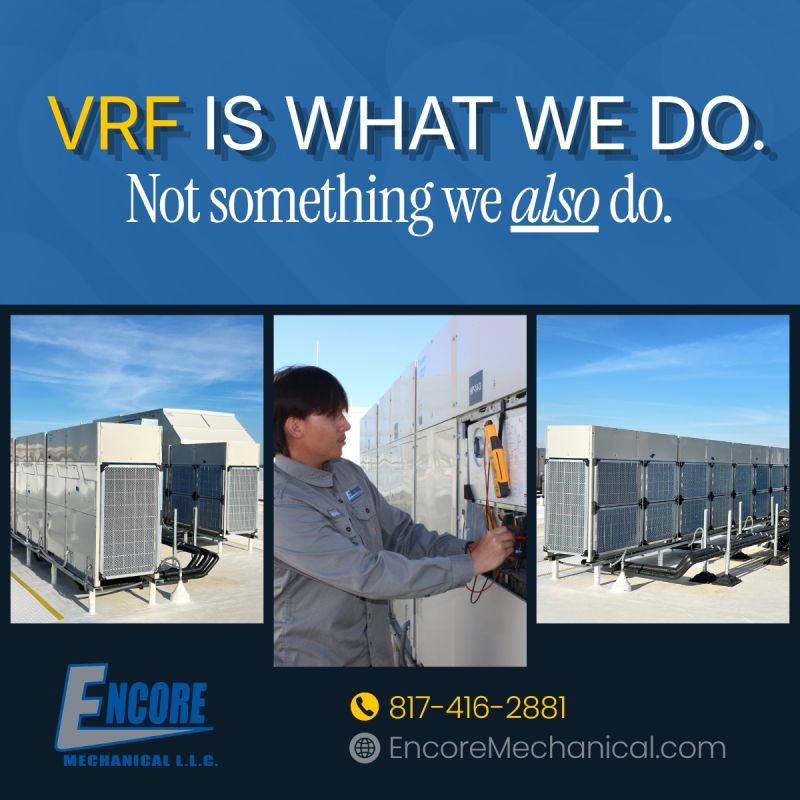

Most commercial HVAC contractors installed their first VRF system last year. We installed our first one over two decades ago.
VRF isn’t a different rooftop unit. It’s a different discipline entirely — refrigerant piping design, zoning logic, controls integration all are specific for VRF. None of it translates from traditional HVAC equipment. Get any one of those wrong and you inherit uneven comfort, emergency calls, and a system that never performs to spec.
That’s the gap most building owners don’t see until they’re already living in it, and they’ll often blame the equipment versus realizing that the company that installed it missed the mark.
VRF is energy efficient: Using inverter-driven compressors and the option to simultaneously heat and cool, VRF uses lower energy than conventional variable-air-volume systems.
VRF is flexible: VRF can provide the varying conditioning required as the cooling/heating load changes due to tenant turn-over.
VRF saves space: Since the cooling is transferred through piping instead of ductwork, VRF requires less ceiling space and outdoor units have a smaller footprint than traditional rooftop units. This space saving may provide greater square footage for tenant rental .
Don’t do VRF without a specialist, you won’t get the results you are looking for.
VRF is what we do. Not something we 𝘢𝘭𝘴𝘰 do.
If your building is experiencing issues with it’s VRF equipment, let’s talk.
📞 817-416-2881