Mon – Fri: 8:00am – 5:00pm
(817) 416-2881

VRF HVAC Blog & News

Encore Mechanical Builds Space for Future Growth

Most companies expand after they’ve run out of room.

Not Encore.

We started planning our building expansion before we technically needed it.

That difference is easy to miss, but it shapes everything about how a company grows.

Expanding under pressure means taking whatever space is available, on whatever terms are available. Expanding on purpose means choosing the space, layout, and timing that fit where the company is headed, not where it is today.

NOW 6,000 SF Office & Conference Space

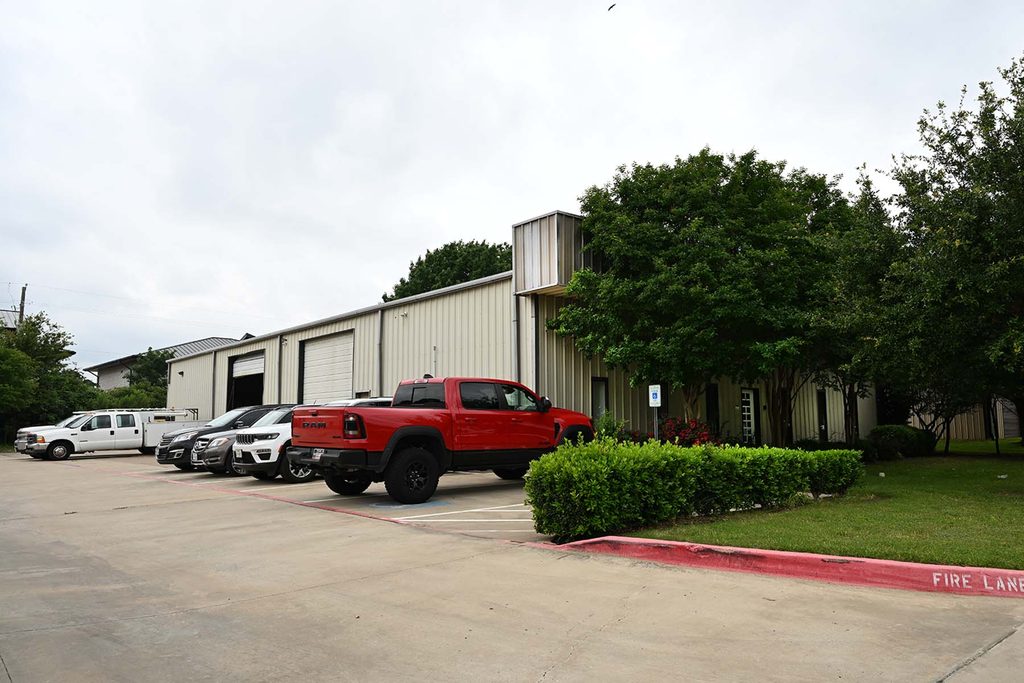
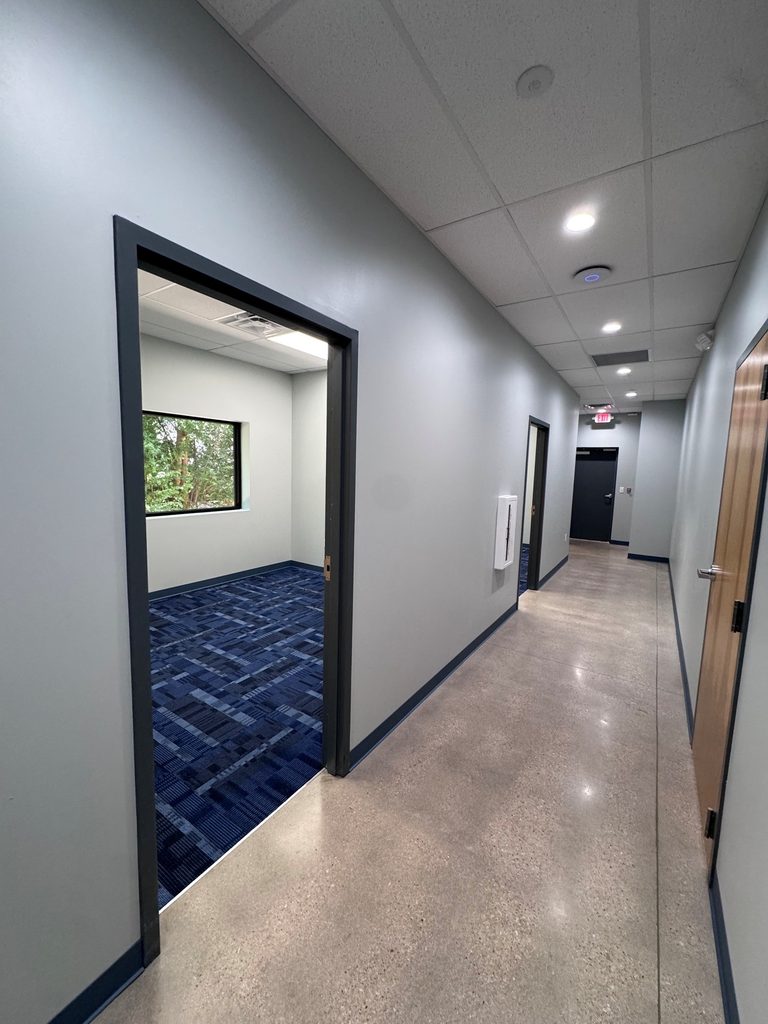
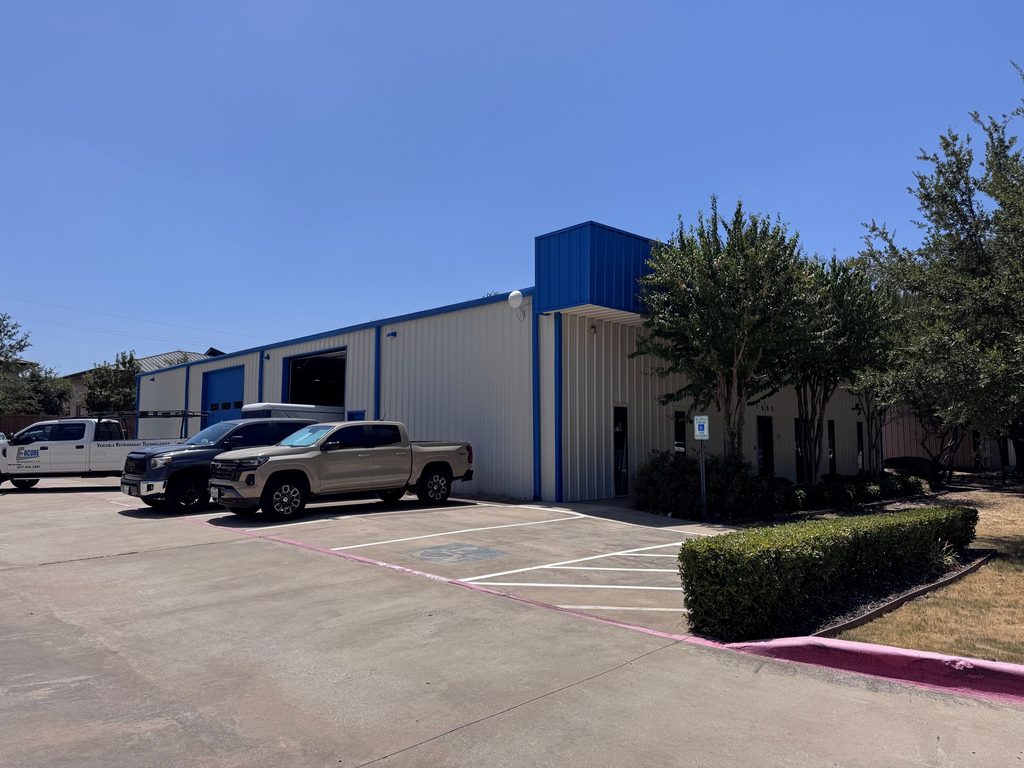
Our main building, located at 1597 Hart Street, recently transformed 3,000 SF of warehouse space into seven new offices and meeting spaces, which obviously included a new VRF HVAC system. The building now has two rooms with teleconferencing technology and a generator to keep the Encore team operational through electrical outages.

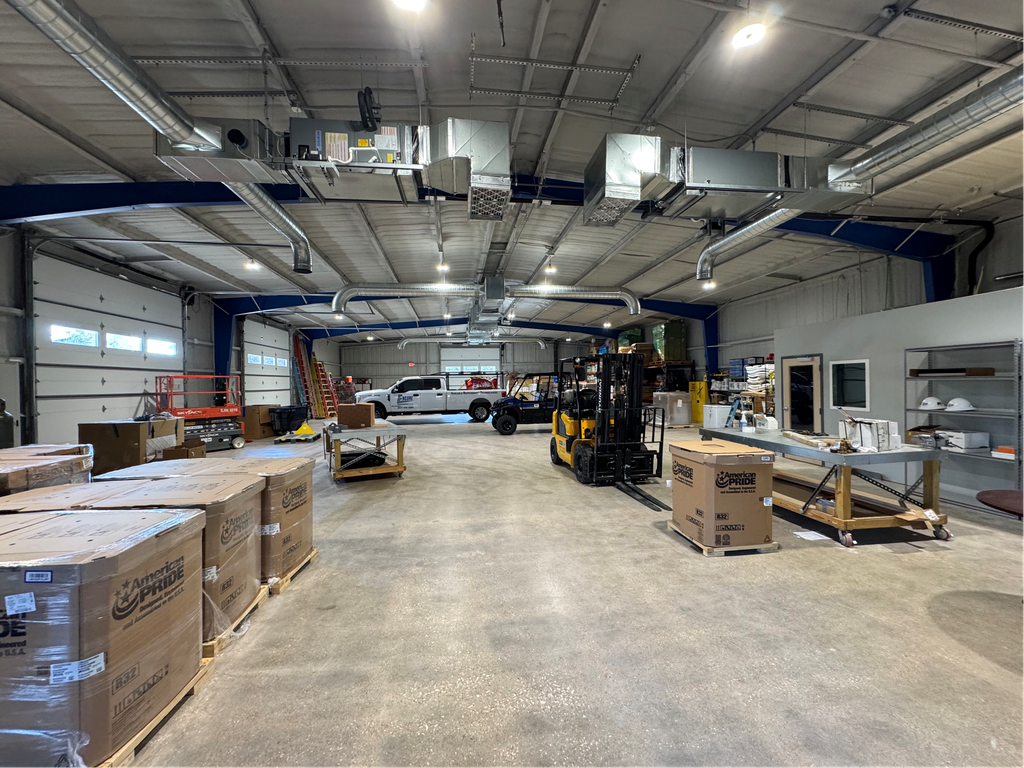
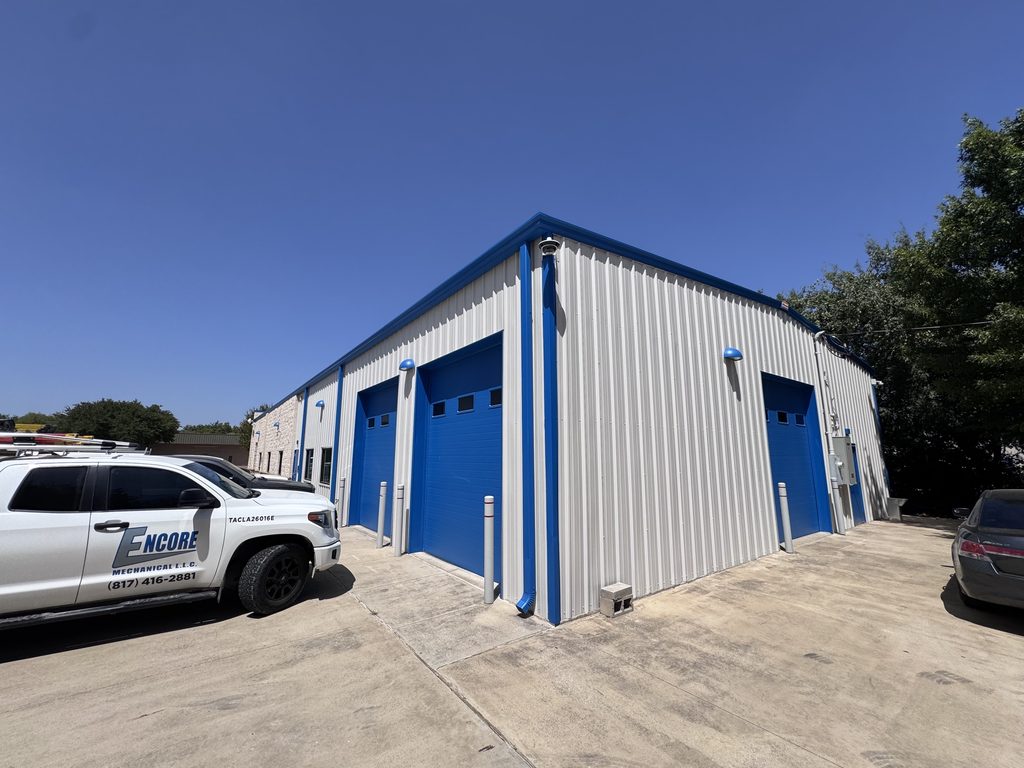
FULLY Renovated 6,000 SF Warehouse & Prefabrication Space

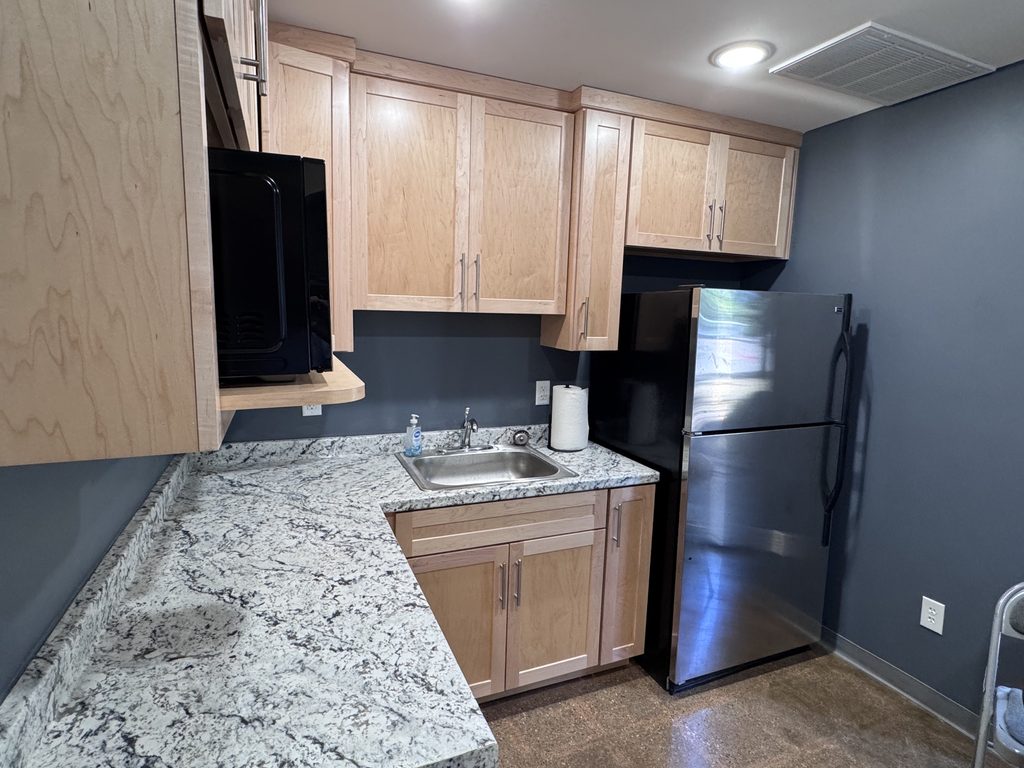
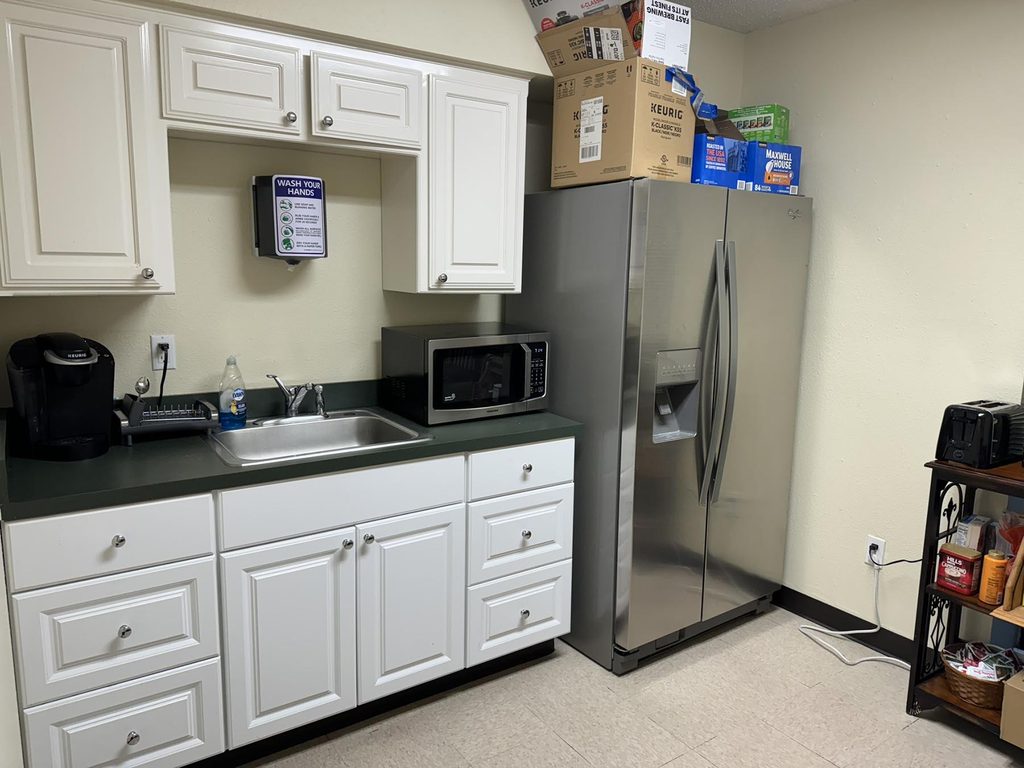
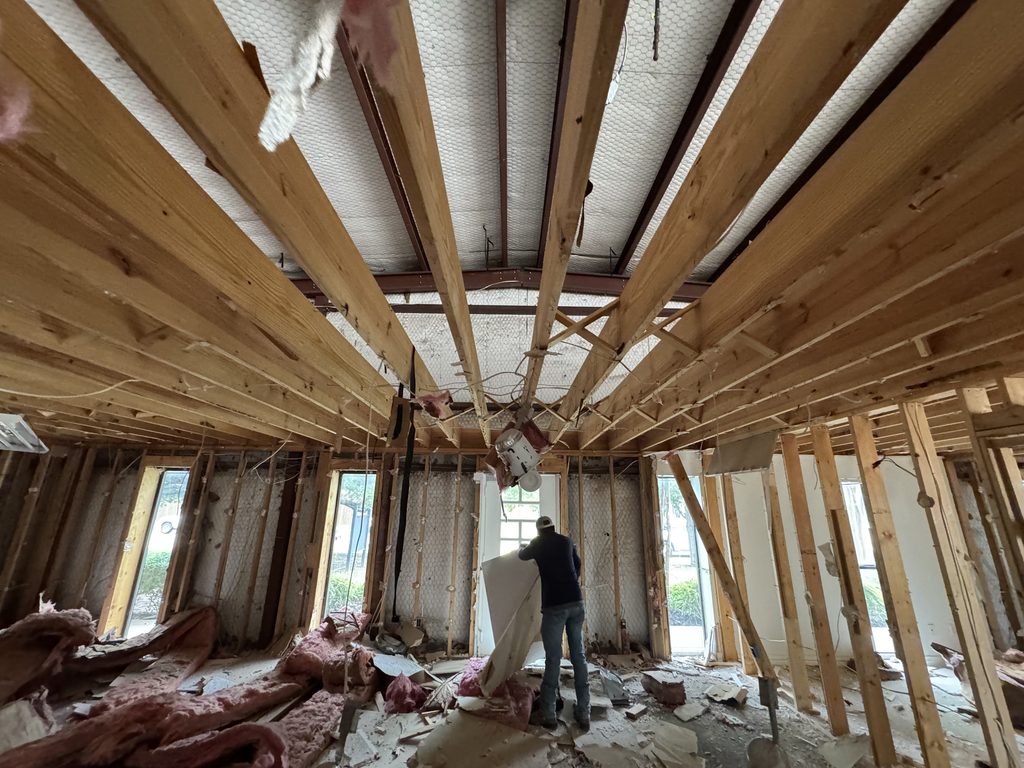
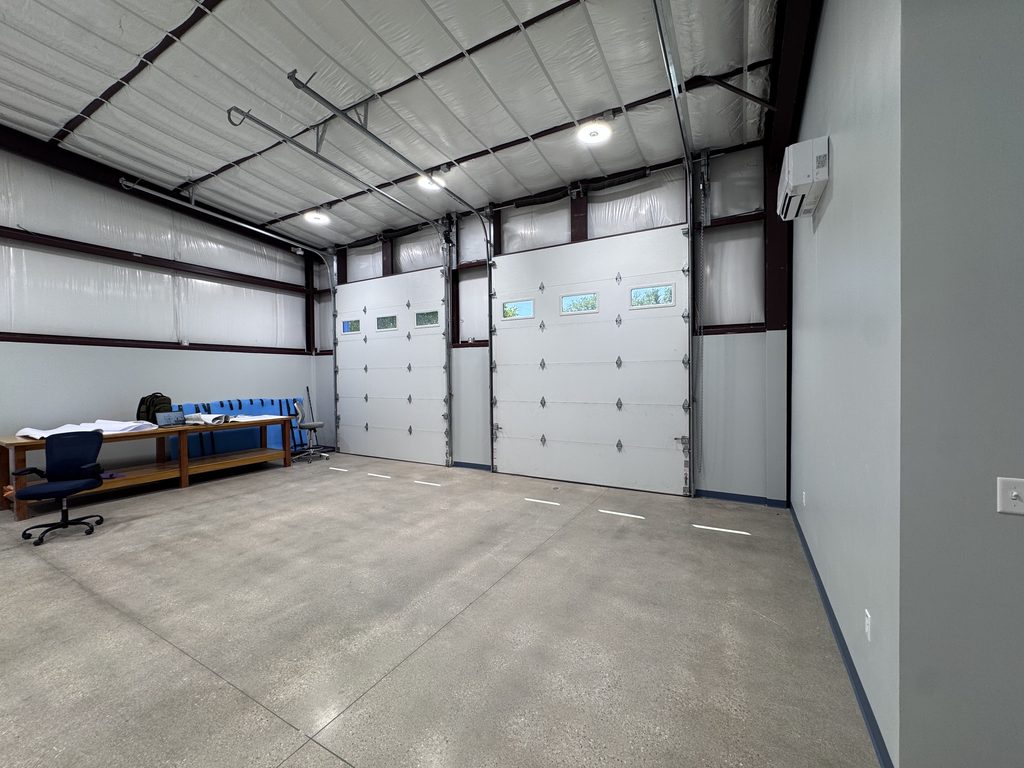
In the 6,000 SF building across the parking lot, 3,000 SF of old office space was demolished. The entire building was stripped down to the iron structure and metal panel skin. Everything was reinsulated, concrete floors were resurfaced, and the building also got 16-tons of VRF HVAC. The new breakroom, 2 bathrooms, and ice machine room, make the 1594 Hart Street building ultra convenient for the installation and service teams.

Network, security and access control systems – all newly installed or upgraded in both buildings.

Our strategic planning and financial investment towards Encore’s long-term expansion positions us for sustained, scalable growth in the commercial VRF HVAC industry.
View our before and after pictures below! To learn more about our recent installation projects, check out our Projects page.
Read more

Expert Commercial HVAC Contractor Specializing in VRF

Most commercial HVAC contractors installed their first VRF system last year. We installed our first one over two decades ago.

VRF isn’t a different rooftop unit. It’s a different discipline entirely — refrigerant piping design, zoning logic, controls integration all are specific for VRF. None of it translates from traditional HVAC equipment. Get any one of those wrong and you inherit uneven comfort, emergency calls, and a system that never performs to spec.

That’s the gap most building owners don’t see until they’re already living in it, and they’ll often blame the equipment versus realizing that the company that installed it missed the mark.

VRF is energy efficient: Using inverter-driven compressors and the option to simultaneously heat and cool, VRF uses lower energy than conventional variable-air-volume systems.

VRF is flexible: VRF can provide the varying conditioning required as the cooling/heating load changes due to tenant turn-over.

VRF saves space: Since the cooling is transferred through piping instead of ductwork, VRF requires less ceiling space and outdoor units have a smaller footprint than traditional rooftop units. This space saving may provide greater square footage for tenant rental .

Don’t do VRF without a specialist, you won’t get the results you are looking for.

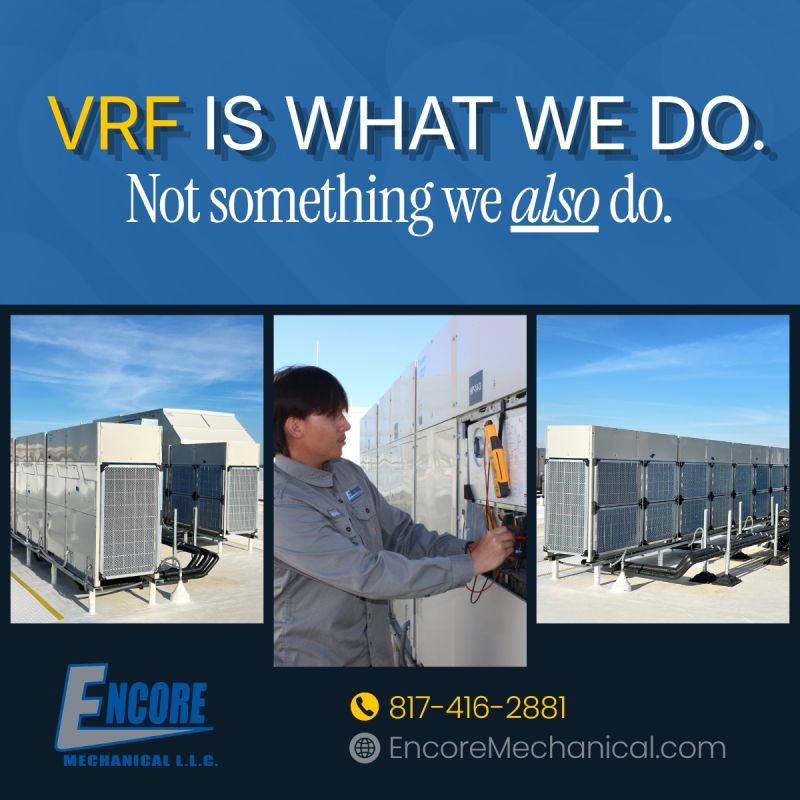
VRF is what we do. Not something we 𝘢𝘭𝘴𝘰 do.

If your building is experiencing issues with it’s VRF equipment, let’s talk.

📞 817-416-2881

Read more

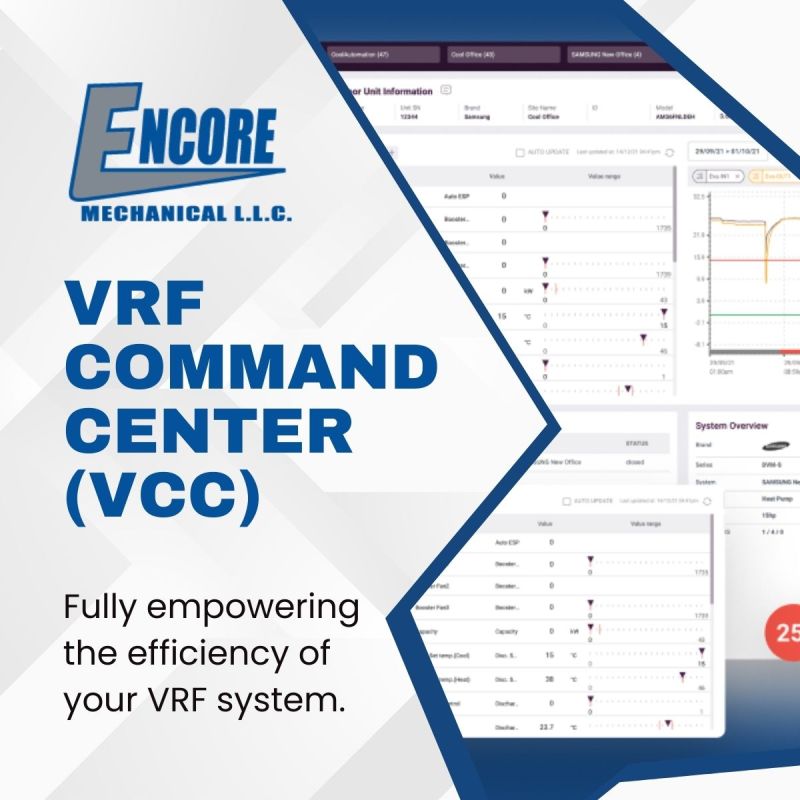
Introducing Encore Mechanicals’ VRF Command Center

Experience a new level of reliability and comfort over your commercial indoor climate!

When the Encore Mechanical VRF Command Center (VCC) is connected to your HVAC equipment our technicians are able to monitor, manage, maintain, and troubleshoot your system to the highest effectiveness and reliability.

Our cloud-based solution monitors where and when energy is being used. System problem and failure alerts are sent to Encore’s Command Center. From there, Encore will start troubleshooting remotely. If it’s necessary to dispatch a technician to your VCC-connected property, our technicians will have a more targeted strategy to resolve the issue in a timely manner.

The VCC remote service and diagnostic tools maximize the information available in analyzing on-site equipment performance. Our technicians will fine-tune issues while still at the office, and sometimes even resolve it without stepping foot on the rooftop. This means a shorter turnaround on getting your VRF system back to top performance.

No matter what VRF manufacturer or the number of years your system has been installed, our VCC is a game changer in ongoing VRF performance!

Curious to find out more? Please call us at 817-416-2881.

Read more

Why you should choose VRT for your commercial HVAC needs.

Having spent the last 15 years focusing on installing and servicing VRF equipment, you could say we are partial. We would say that we are fully invested in the value that VRF systems provide our customers. 

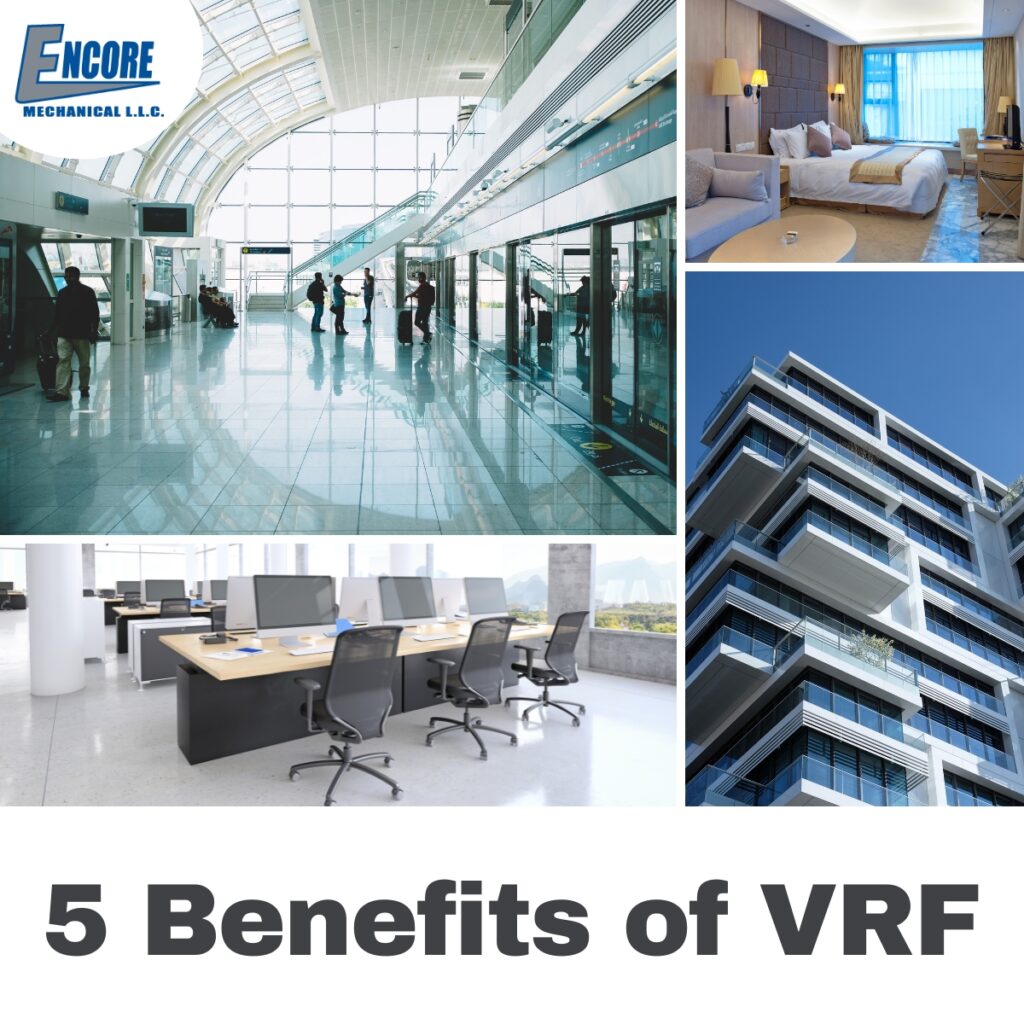
Here are our 5 top reasons why we recommend VRF:

#1 Design flexibility – VRF refrigerant lines are small and with the multitude of indoor units make getting what you want and need simple.

#2 Energy Efficiency – VRF systems are designed to be most efficient during the greater range of demand.

#3 All electric heat pump – No fossil fuels, water, heat strips, or gas pipes or flues.

#4 Low operation noise – quiet at just 55 decibels.

#5 Comfort – Different zones are simultaneously supplied with varying degrees of heating and cooling.

Don’t hesitate to call us at 817-416-2881 with any questions you have on the benefits of VRF!

Encore Mechanical – VRF Without Compromise!

Learn more about Encore Mechanical’s dedication to Variable Refrigerant Technologies.

Read more

10 Questions to Ask When Hiring An Experienced VRF Provider

Anyone can purchase, install, and service VRF equipment. However, just because they can doesn’t mean they should. Leaving the intricacies of VRF up to just anyone will likely result in a wide variety of problems.

Are you confident in the capability of the VRF service provider you’ve hired?

Below are 10 questions to ask when hiring an experienced VRF Provider.

  • #1: Do you have tools such as hoses and manifold sets that are dedicated to the type of refrigerant oil shipped within the equipment?
    Answer: Yes. Cross contamination by different oils in VRF system can lead to problems.
  • #2: What type of wire is required for VRF controls?
    Answer: it varies by manufacturer and is typically 16 or 18 gauge, 2-conductor, stranded, and one manufacturer require non-shielded while the others require shielded wire.
  • #3 What pressure do you run for testing?
    Answer: most manufacturers recommend 550 psi, Mitsubishi recommends 600 psi.
  • #4 How long do your run pressure testing?
    Answer: Most manufacturers require a minimum of 24 hour positive pressure test, however if ambient temperatures the pressure will too and therefore may require several days to verify no leaks.
  • #5 Why do you pull a vacuum on a system?
    Answer: to remove moisture and verify no leaks.
  • #6 What measure of vacuum needs to be pulled and for how long?
    Answer: lower than 500 microns and manufacturers vary on vacuum tests requirements, some say they should hold for 1-hour, others require 24 hours.
  • #7 Some manufacturers recommend setting the system into forced evacuation during vacuuming; why?
    Answer: Forced evacuation opens all the electronic valves in the system to make sure your pulling a vacuum on the entire piping network.
  • #8 How far away should an elbow be from an indoor unit connection?
    Answer: most manufacturers recommend 16 to 20”
  • #9 What should you use to purge atmospheric air from the refrigerant piping when brazing joints?
    Answer: Dry nitrogen
  • #10 How are extended warranties awarded on new installations?
    Answer: it varies by manufacturers and while some offer 10-year parts & 10-years compressor standard warranties without documentation, others require a very specific lists of items and run time to extend their warranties from 1-year parts & 7-years compressor to 10-year parts & 10-year compressors.

Not getting the right answers? Give us a call (817) 416-2881 or send us a message.

Read more